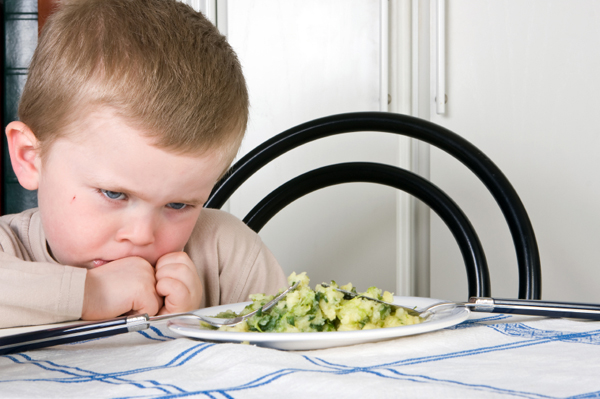
 So as I was sitting here trying to think of things in my life that make me think of cognitive dissonance, the first thing that came to my mind was food. Not because I was hungry at the time of writing this, but because when I thought back to what I wouldn't eat when I was young compared to what I will eat now, there have been some changes in my attitudes towards them.
The cognitive dissonance theory states that holding cognitions inconsistent with our behavior arouses psychological tension that we try to reduce by ultimately changing our attitudes about the behavior (Festinger, 1957). What better thing than food for this to apply to?
I remember my mom using both insufficient justification and insufficient deterrence to egg me on to eat my vegetables. Insufficient justification being a condition in which people freely perform an attitude discrepant behavior without receiving a large reward and insufficient deterrence being a condition in which people refrain from engaging in a desirable activity, even when only a mild punishment is threatened (Festinger and Carlsmith, 1959; Aronson and Carlsmith, 1963).
In my youth, I used to hate spinach, broccoli, and all those other leafy green goodies. Nowadays, I'll take them as a side to my meal no problem and even like eating spinach and broccoli. My mom got this change to happen over the course of time we would go to Luby's. At the end of the food line there is always a spot for Jello and boy did I like Jello, but I also loved cake. If I could have one or the other, cake would most certainly have won out.
 So, the way she used insufficient justification was that she would give me Jello instead of cake for eating my veggies. Being that my desired behavior would be to not eat the veggies, she used insufficient deterrence by saying she'd be disappointed if I didn't eat my veggies rather than offering a whoopin' if I didn't. She'd also throw in little things to make me look at the veggies differently like using Popeye for eating spinach or calling the cuts of broccoli trees to that I could devour the tree like a dinosaur (I really liked dinosaurs--real and fake--as a kid and if you know those <-- particular dinosaurs I just want you to know that you're awesome).
All in all, she got me to eventually like veggies to the point that I would order them on my own. Granted there are some foods that I still refuse to eat like raw onions, tomatoes by themselves, and grapefruit. So, I plan on using these methods on my children when they get older so they can be omnivores like me.
Festinger, L. (1957). A theory of cognitive dissonance. Stanford, CA: Stanford University Press.
Festinger, L., & Carlsmith, J. M. (1959). Cognitive consequences of forced compliance. Journal of Abnormal and Social Psychology, 58, 203-210.
Aronson, E., & Carlsmith, J. M. (1963). Effects of severity of threat on the devaluation of forbidden behavior. Journal of Abnormal and Social Psychology, 66, 584-588.


 Posts
Posts


1 comments:
Sometimes I worry about your future children... Although you and your children might someday single-handedly save the Nerf corporation from bankruptcy.
Anyway, in my case, I guess my attitude toward things like broccoli was just too strong for cognitive dissonance. There was no, "Oh, I must like it because I'm doing it." Instead, I was so damn miserable over every damn, stinking bite of that stupid green vegetable that should burn in hell for all of eternity and then a lot of years after that, that I never changed my attitude. As you can see.
Post a Comment